রবিবার, ২২ মার্চ ২০২৬, ০৩:৪৯ অপরাহ্ন


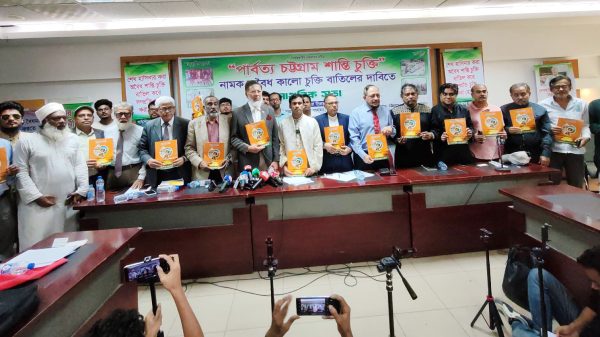

Citizen meeting of Sovereignty Protection Council held to demand cancellation of “Chittagong Hill Tracts Peace Agreement”.
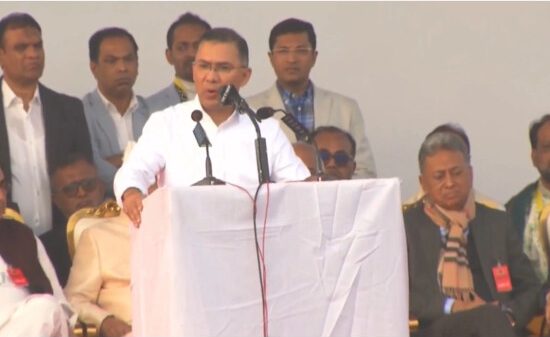
A civic meeting was held on the initiative of Sovereignty Protection Council at Tofazzal Hossain Manik Mia (VIP) Hall of Jatiya Press Club at 10 am on Tuesday, 02 December, demanding the cancellation of the illegal black agreement called “Chittagong Hill Tracts Peace Agreement”.
The Chief Coordinator of Sovereignty Protection Council, Md. Mostafa Al Ihaz, spoke as the chief guest at the civic meeting, Prof. Abdul Latif Machum, former VC (Department of Government and Politics, Jahangirnagar University). Brigadier General Aman Azmi spoke as the main speaker. Rawa Chairman Col. Abdul Haque, Professor Dr. Abu Musa Md. Arif Billah (Visiting Professor, Zhangju Normal University, China), Brigadier General Nasimul Gani, former Ambassador Saqib Ali, Brigadier General HRM Rokanuddin, Lt. Col. Hasinur Rahman, SM Zahirul Islam Chairman RJF, Barrister Shahriar were also present as special guests. Iftekhar Fuad, Advocate Parvez Talukder, Aminul Islam Bulu, Abdul Hannan Al Hadi, Dr. National leaders of various political parties including Sharif Shaki, Mizanur Rahman, Syed Shariful Islam, Mu. Sahidul Islam, journalist leaders, lawyers and leaders of permanent residents of Chittagong Hill Tracts.
In the speech of the chief guest, Professor Abdul Latif Masud said that a controversial chapter in the history of Bangladesh began on this day of Akzar in 1997 centered on the Chittagong Hill Tracts. The then Prime Minister Sheikh Hasina signed a peace accord with the Jan Sanhati Samiti (PCJSS). The agreement, which had far-reaching effects on Bangladesh’s constitution, sovereignty, country’s integrity and state administrative structure, was politically promoted as a “peace-building success” at the time, but the reality was different. The agreement was criticized by many experts, military officials and policy makers as being unequal, discriminatory and contrary to the basic structure of the state from the outset. In 1998, Jamaat termed the peace agreement of then opposition leader Begum Khaleda Zia as a black agreement.BNP along with seven parties were on a long march. Most of the treaty’s 72 articles are unconstitutional, with serious inconsistencies, particularly on questions of land management, administrative authority, security measures and civil rights. One of the biggest flaws in the agreement is that the opinion or experience of the Bangladesh Army, central to the state’s security, was not taken into account at the time of signing.
In the speech of the chief negotiator, retired Brigadier General Abdullahil Aman Azmi addressed the Chief Advisor of the Interim Government and said that the slave Awami League government of India had closed about 200 camps from the Chittagong Hill Tracts, giving an opportunity to the terrorists supported by India to increase their activities only for the benefit of India. To protect the integrity of the country and stop the violence of the extremist armed terrorist groups of Chittagong Hill Tracts, 4 additional infantry brigades should be deployed in Chittagong Hill Tracts.
In his special guest address, Rawa Chairman Colonel (retd) Abdul Haque said that since 1973, the army was the main institution to protect the hill region from armed insurgency, murder, kidnapping and separatism. Ignoring their experience, ground reality, intelligence assessment, Sheikh Hasina signed the agreement only as a political decision on India’s prescription. In later times numerous errors and deviations arose in it. This resulted in a fragile security structure in the highlands, which then facilitated the resurgence of armed groups. As a result, the ongoing conflict in the mountainous region has not stopped at all but has increased six times. Before the agreement, the armed organization was one, now as a result of the agreement, it has increased to 5-6. On February 10, 1998, 739 members of Santu Larmar’s group surrendered at Khagrachari with some useless weapons, which were mere demonstrations of the available weapons. At that time 739 members surrendered, but currently there are 80 to 90 thousand armed members of 6 organizations, illegal weapons stockpiles amount to lakhs. But the basic main terms of the agreement were,By avoiding illegal weapons, terrorists will return to normal life. Sadly, even after 28 years of Satya Pact, Santu Larmar’s JSS has not completely surrendered its illegal arms to the government. On the contrary, they increased the storage of modern weapons and made the entire Chittagong Hill Tracts a hell by using illegal weapons, extortion, armed robbery, riots and murders and anarchy. It is a form of betrayal of the state. The tolerant policy of the state towards them is also working in alliance with the anti-national forces considering the weakness of the state.
Md. Mostafa Al Ihaz, the chief coordinator of the Sovereignty Protection Council, said that to deal with this situation, canceling the illegal black agreement called peace agreement and making a long-term plan with the representatives of Bengali and 13 peoples and a reconciliation agreement. In addition to the administrative action of the government in armed suppression, the political parties must also take steps to establish permanent peace in the Chittagong Hill Tracts.
The path to lasting peace in the mountains rests on three pillars, a. Security, b. Constitution, c. equal rights By strengthening these three pillars, it is possible to transform Chittagong Hill Tracts into a peaceful, safe and prosperous region. Now is the time to take a bold decision in the interest of security, sovereignty and overall stability of the state. The 1997 peace accord has today proved to be a misguided political decision. None of the goals of peace, development, security or ethnic harmony in the hills have been realised. Rather, the agreement has created new crises, discrimination and the rise of anti-state forces. In the interests of the integrity and national security of Bangladesh, it is time to re-evaluate this agreement and make it practical.To build a new structure based on the constitution and equal rights.

| সোম | মঙ্গল | বুধ | বৃহ | শুক্র | শনি | রবি |
|---|---|---|---|---|---|---|
| ১ | ২ | ৩ | ৪ | ৫ | ৬ | |
| ৭ | ৮ | ৯ | ১০ | ১১ | ১২ | ১৩ |
| ১৪ | ১৫ | ১৬ | ১৭ | ১৮ | ১৯ | ২০ |
| ২১ | ২২ | ২৩ | ২৪ | ২৫ | ২৬ | ২৭ |
| ২৮ | ২৯ | ৩০ | ৩১ | |||