Khaleda Zia’s Last Day Story : When Life Ends, Votes Still Count * —-Professor MA Barnik
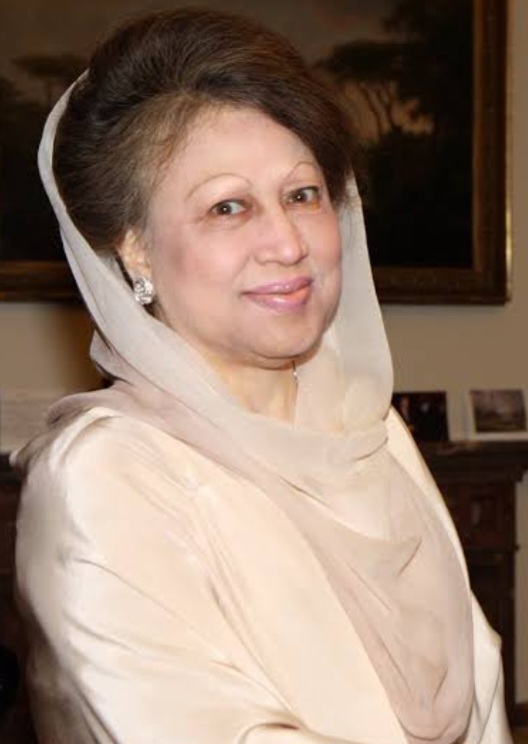
* Khaleda Zia's Last Day Story : When Life Ends, Votes Still Count *
----Professor MA Barnik
Khaleda Zia—Bangladesh's first woman prime minister, the longest-serving opposition voice since independence—was spending her final days in a hospital bed. Breathing was erratic, vision blurred, body wracked with pain. According to the doctors, he was on life support, fighting against time.
Just then—
Nomination papers were submitted in three constituencies using his name.
The country was stunned and did not question.
The state remained silent.
The Election Commission did not raise the question.
Next day—
A little news came out:
"Khaleda Zia is dead."
Question after question, but no answer
Who is dying, whose physical or mental capacity to make medical decisions is questionable—
How did he become a candidate for three seats at once?
Was it his decision?
Or standing over a dead body, some were completing their political calculations?
If it is symbolic nomination—
So why didn't the state say, “It's immoral”?
Why didn't the Election Commission say, “This is not humane”?
And if it is strategic nomination—
But in whose interest is it?
Why is the death marcher a victim of politics?
Khaleda Zia has been victimized many times in the politics of Bangladesh.
In false cases, imprisonment, denial of medical treatment, not allowing medical treatment abroad.
But standing on the verge of death, he was not spared.
A man on his deathbed was supposed to be surrounded by family, prayers, silent love.
But his name was then on the ballot paper, in the election account book, in the power figure.
A man is no longer a man—
He became a political symbol, a voting icon, a last name.
Does this state not hear the cry?
In a country where even a death marcher is made a political shield,
Is the death of humanity in that country not earlier?
Khaleda Zia's death is not just the death of a politician.
It was—
Death of a Political Etiquette
Death of a Moral Boundary
And most importantly—
The death of the possibility of a humanitarian state
Before he breathed his last he was burdened—
Not the burden, but the object used.
last wordHistory will one day ask—
A woman, a former prime minister, a man on his deathbed—
Why were his last moments so cruel?
And we—
Were we just spectators?
Or the silent criminal?
Khaleda Zia's death brings tears to our eyes—
But that leaves more questions.
This country does not allow anyone to stay out of politics even on deathbed?
© সর্বস্বত্ব স্বত্বাধিকার সংরক্ষিত