Politics of Bangladesh Awami League is banned due to fear of defeat -Michael Rubin
Politics of Bangladesh Awami League is banned due to fear of defeat -Michael Rubin
Hakikul Islam Khokan
Michael Rubin, a senior fellow at the American Enterprise Institute and a US-based political analyst, commented that the interim government and the Jamaat-e-Islami party jointly chose to ban political activities due to the fear of not being able to defeat the Bangladesh Awami League in a free and competitive election. Khabar Ibn News.
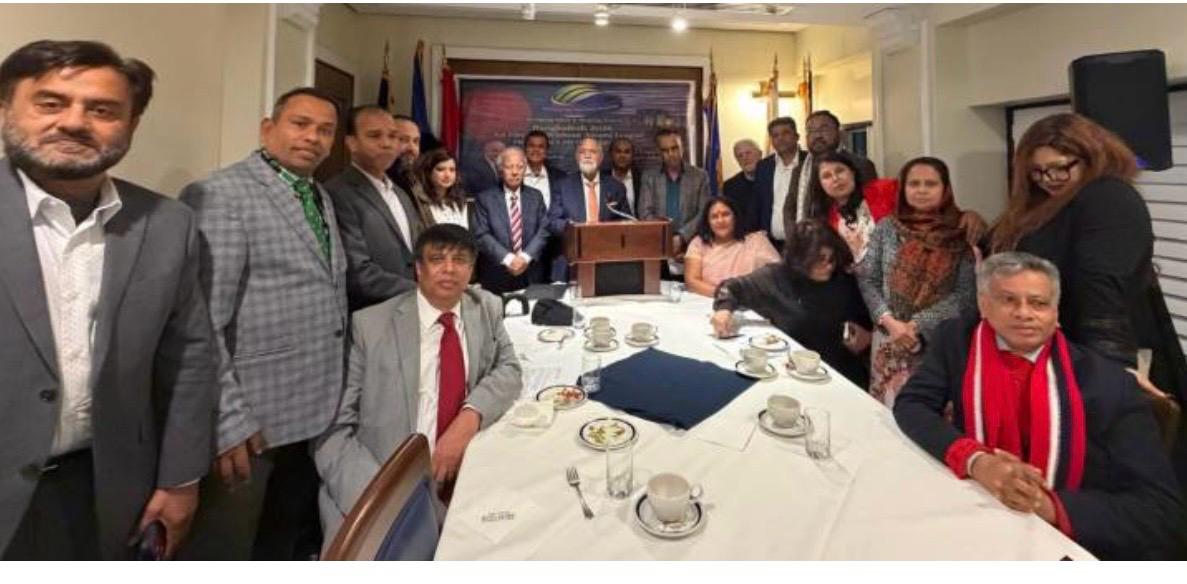
Last Thursday, February 5, 2026, he said these things in a dialogue on Bangladesh organized by the Washington DC-based think tank Institute for Strategic Dialogue (ISD) at the National Press Club in Washington.
The former foreign minister of Bangladesh AK Abdul Momen and the president of United States Bangabandhu Parishad and brave freedom fighter Dr. Nurun Nabi and presided over by ISD President Dastgir Jahangir.
Michael Rubin said in his speech, the trend of pushing rival political parties out of the field through legal and administrative tactics is not new in Bangladesh politics. However, in the current context, this trend is creating a deeper crisis. He also said that the main reason for banning a big political party like Awami League is that this popular political party cannot be defeated in any way if there is a fair and participatory election.
He commented that suppressing political competition may be beneficial in the short term, but in the long run it undermines the stability of the state and democratic institutions.
Former Foreign Minister AK Abdul Momen said that the internal political crisis of Bangladesh is having a direct impact on the country's diplomatic relations and international image. According to him, if the political stalemate is prolonged, there is a risk of negative impact on the economy, foreign investment and international cooperation.
Dr. In his speech, Nurun Nabi emphasized on the spirit of liberation war, non-sectarian political philosophy and constitutional continuity. He said political violence and divisive politics weaken society from within and create lasting wounds in state structures.
Dr. human rights activist participated in the discussion.Dilip Nath said that human rights, civil liberties and rule of law are most at risk in the current political reality. He called for an end to the culture of litigation, harassment and intimidation to suppress dissent.
Other speakers at the event said that currently Bangladesh is witnessing a new intense political polarization in all areas of power, administration and roads. According to them, cases of suppression of dissent, intimidation and allegations of political vendetta are increasing. Speakers also expressed deep concern over electoral system, freedom of expression, security of minorities and overall law and order situation.
The dialogue was moderated by ISD director and journalist Shaban Mahmud and executive director Shayla Ahmed Lopa. American security analyst Jamal Hasan, public opinion maker Greg Rashford, Zia Karim,Abdul Quader Mia and others. ISD Vice President Senior Journalist AZM Sajjad Hossain Sabuj delivered the concluding speech.
© সর্বস্বত্ব স্বত্বাধিকার সংরক্ষিত