বৃহস্পতিবার, ১৪ মে ২০২৬, ০৫:২২ অপরাহ্ন


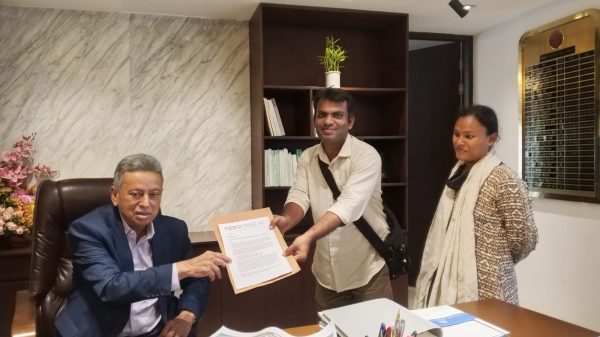

Demonstration march and presentation of memorandum demanding proper action for proper treatment of measles affected children, allocation of 6% of GDP to education sector and 5% to health sector
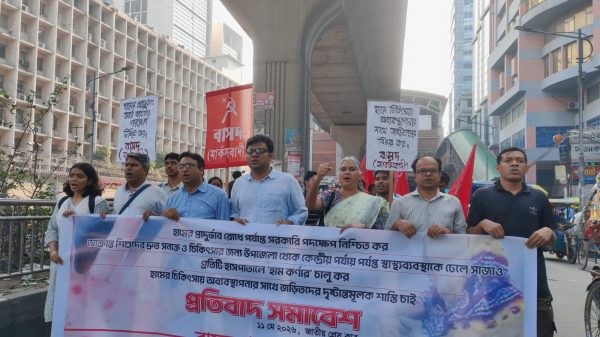
On Wednesday, May 13, at 11 a.m., a protest rally and march was held at the foot of Dhaka University’s Aparajeya Bangla on the initiative of Samajtantrik Chhatra Front. The assembly demanded that children affected by measles be treated properly, that those involved in the mismanagement of measles vaccination be brought under punishment and that 6 percent of the GDP be allocated to the education sector and 5 percent to the health sector in the 2026-27 financial year budget. Central organizing secretary of the organization Pragati Burman Tamar addressed the gathering, convener of Dhaka University branch Mozammel Haque, finance secretary Naushin Mustari Sathi and general secretary Rafikuzzaman Farid. Central President Salman Siddiqui presided over the rally. At the end of the rally, a procession with placards carrying various demands circled the important places of the campus and ended at TSC. After the rally and march, a delegation team submitted a memorandum to the Finance Minister.
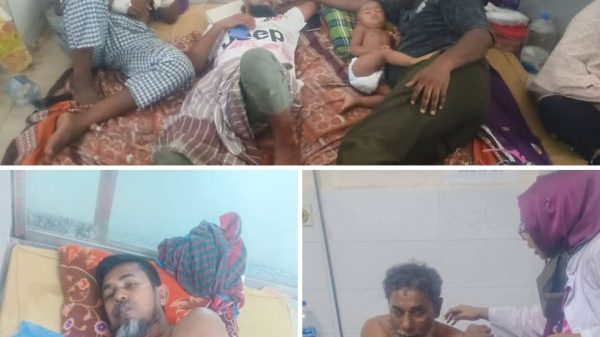
Muzammel Haque said in the gathering, “Recently, despite the increase in the prevalence of measles in the country, there is a lack of coordination and administrative weakness in its prevention and treatment management, which is further increasing the health risk. According to media reports, the death toll has crossed 400. The number of infected and dead is increasing every day. Negligence and mismanagement of vaccination by the previous interim government, weakness of the vaccination program are responsible for this situation. Measles outbreak and child mortality. The current government’s lack of effective measures to prevent it is also noticeable. Immediate action should be taken and those involved in the negligence and mismanagement of vaccinations by the interim government should be brought to justice.”
Naushin Mushtari Sathi said, “The education sector in Bangladesh has always been neglected and neglected. Every level of education from pre-primary to higher education is facing various crises due to lack of adequate allocation in education. The quality of education has gone to rock bottom. Privatization of education sector-Commercialization and contraction policies are in effect. As a result, the cost of education is increasing and the children of poor and low-income families are being completely deprived of the right to education. The current government took office at a special time after the coup. As part of the democratic transformation of the state, the government will play a necessary role in changing the education system – it is expected by the student society. Besides, ensuring allocation of 5 percent of GDP to education sector was one of the election promises of BNP government. We want to believe that the current government will not neglect important sectors like education like previous governments.”
In the gathering, Rafiquzzaman Farid said, “The interim government has made trade agreements, port leases, corridors with America without jurisdiction. But the public has neglected important matters like immunization programs, resulting in the loss of countless fresh lives. Now the BNP government is giving the slogan ‘Bangladesh first’. If this slogan was to be truly understood, first of all steps should be taken to treat measles-affected children in the country – ‘measles corner’ should be opened in every government hospital, ICU should be arranged. But that urgent action of the government is not in sight.”
In the President’s speech, Salman Siddiqui said, “According to the recommendations of UNESCO and international education organizations, at least 25 percent of the budget or 6 percent of the GDP should be allocated to the education sector in developing countries. Looking at Asian countries, Vietnam allocates around 20 percent of its budget, Malaysia over 19 percent and even Nepal allocates a much higher proportion of GDP than Bangladesh. Clearly, the education sector in Bangladesh has always been neglected and neglected. Our university ranking is at the bottom today due to negligible allocation to research. Library does not have modern reference books, laboratory does not have necessary chemicals and equipment. The state is not able to properly guarantee quality accommodation and nutritious food for ordinary students. To get out of this dilapidated situation, 6 percent of GDP should be allocated to the education sector in the upcoming fiscal year 2026-27 national budget.”
He also said,”Currently people have to bear more than 70 per cent of the total medical expenses out of their own pockets, which is pushing the life of the common man into a cycle of debt and poverty. The reality is that there is an acute shortage of doctors, beds and medicines in the government hospitals. With only 6-7 doctors per 10,000 people, the common man is deprived of essential medical services. The rural health system has been weak and neglected for a long time. On the other hand, the private health sector has commercialized the common man. As a result, treatment is no longer guaranteed as a basic right, but it has become dependent on affordability.
Above all, it is hoped that in the upcoming budget, education and health sectors will be boosted by ensuring allocation of 6 percent of GDP to education sector and 5 percent to medical sector.”
Message Sender-
Nahiyaron Rehman Rahat
Member, Central Committee
01616-013381